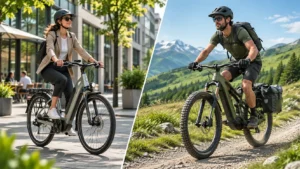
Choosing an e-bike is easier when you start from how you will ride, not from the spec sheet. This guide walks you through the decisions that matter most.
1. Start with where you ride
Daily commuting, weekend tours and mountain trails each ask for a different bike. City and trekking bikes focus on comfort, lights and racks. Mountain bikes focus on suspension, grip and strong brakes.
Commuting
Look for mudguards, a rack, integrated lights and a comfortable upright position.
Touring and trekking
A reliable battery, a stable frame and a relaxed geometry make long days far more enjoyable.
Trails
Choose front or full suspension, hydraulic disc brakes and wide tyres.
2. Understand the motor
Mid-drive motors sit at the cranks and feel natural on hills because they use the bike’s gears. Hub motors sit in the wheel and are often simpler and more affordable. Torque matters more than peak power if you ride in hilly areas.
3. Think about battery and range
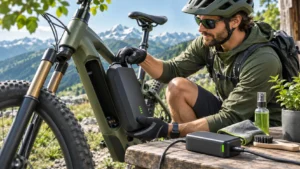
Battery capacity is measured in watt-hours (Wh). Higher capacity usually means more range, but real range depends on assist level, rider weight, terrain, wind and temperature. Treat manufacturer figures as best-case numbers.
4. Get the right frame size
A bike that does not fit is uncomfortable no matter how good the components are. Check the manufacturer’s size chart, and if you are between sizes, test ride both. Low-step frames make mounting easier.
5. Check brakes, tyres and components
E-bikes are heavier and faster than normal bikes, so good hydraulic disc brakes are worth it. Puncture-resistant tyres save time and frustration.
6. Set a realistic budget
Include accessories such as a lock, helmet and mudguards, and think about service costs. A well-chosen mid-range bike often serves better than a stretched budget on a top model.
Need a second opinion?
Tell us how you ride and we will suggest suitable models. Get in touch or browse the shop.